


Shy Bairns Get Nowt
My language is authenticity. That’s the language I speak.

DESSERT // BY DANIEL ROSS
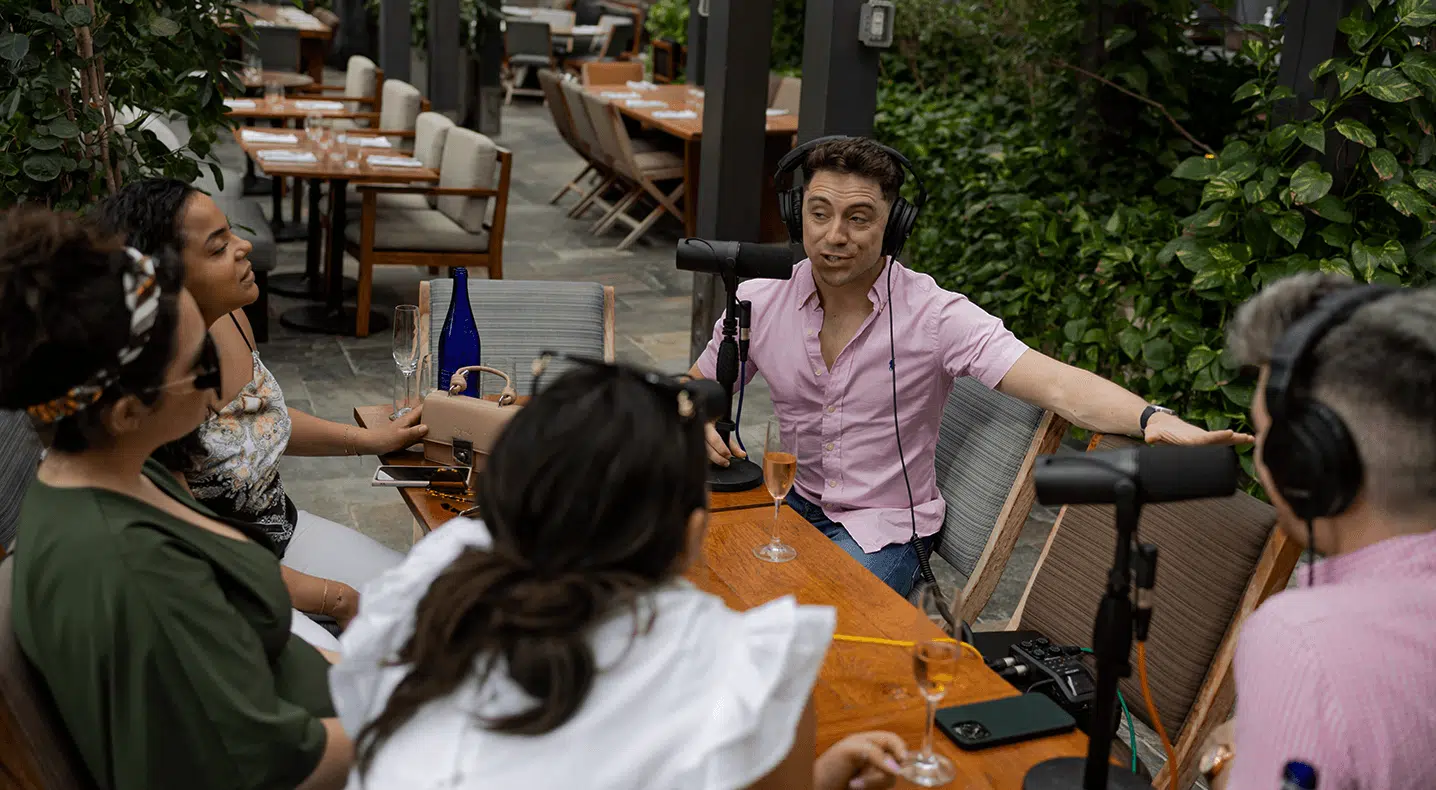
Editor’s Note: I first met Daniel Ross back in December of 2019 in New York City during a black-tie dinner on the Intrepid. We rubbed shoulders with travel influencers and celebrities. Carly Rae Jepsen performed. It was a magical evening.
Little did we both know it would be the last time we’d see each other until March 2022. Our travel schedules finally intersected, and we had the chance to sit down in Miami for this conversation at the stunning EAST hotel in Brickell.
This interview has been edited for length and clarity. Listen to the full version here.
I was living what I thought was a dream. I had the job that I loved, and I was travelling all the time. But looking back from where I am now to then, I wasn’t happy.


On Dan’s Pandemic
Cornelius McGrath
Hello, everybody. And welcome back to a very windy edition of the Junto. We’re not in the Windy City. We’re actually in Miami. It’s raining. It’s 90 degrees, and it’s the windiest it’s been all weekend — classic when you’re trying to record a podcast.
You brought the wind with you.
Yeah. We have our first ever northerner on the show.
Geordie. Oi. Oi.
Daniel Ross. A man I’ve only met twice. This is the second time. He’s a travel coinnessuer. A really brilliant bloke. A man who speaks way more languages than me. Excited we could have you, man. And glad we linked up in Miami.
Thanks for having me, man. I’m glad we got to hang out. I believe that the universe brings people together at certain times in certain places, and I feel like this is one of them.
Absolutely. So last time I saw you, we were in New York on the Intrepid.
Random!
Very random. It was a different time for both of us in our careers. I was getting EE off the ground, and you were working in travel, albeit in a different space. So I’m curious, what’s changed since December 2019?
There were a couple of things. A global pandemic came along. That changed a few things. But what’s changed mainly for me is that the pandemic helped me take control of my life and make it go in a way that wasn’t being controlled by anybody else anymore. I was able to make sure that I was going in the right direction, not being held back by anything or anyone.
What was life like for you before the pandemic?
I was constantly chasing my tail, trying to keep up with everything. Getting that work-life balance was just impossible. When I was employed full-time, I struggled with that a lot. I was living what I thought was a dream. I had the job that I loved, and I was travelling all the time. But looking back from where I am now to then, I wasn’t happy.
I was living vicariously through myself. I wasn’t ever really present in what I was doing. It was always like, “what’s the next thing? How can I be better at this? Or how can I do this?” And I was never focused on the now. I was always focused on “more, more. I want more.” Now, I’ve stripped it all back and started from scratch. And now I appreciate everything day by day, rather than looking to the future all the time.
So, where were you when the pandemic came?
I had just come back from Brazil. I’d been working remotely there for a while, and I was looking for a place to live in London. My lease was up. I was staying with some friends who have now got a little daughter, and I was staying in their spare room at the time. And they were like, “oh, you can stay with us as long as the pandemic happens.” And I was like, “guys. It’s now April. We locked down in March. We all need our own space.”
And so I was looking for somewhere to live in London, but live on my own because it was a pandemic, and I was like, “this isn’t gonna blow over anytime soon.” So I decided to leave London, where I built a life for myself, my crew, my friends, and all my social life. Everything. My whole life was in London, and I decided to go back and move into my childhood bedroom at my Dad’s house. That was April 2020, and that was a real pivotal moment. Because it was like, “okay, I’m 30 years old and completely back to basics. I’m now living in my childhood bedroom. What am I doing with my life?” And so, yeah, that was when everything started to change.
I flew on my own for the first time when I was 13. And I remember being dropped off at the airport and just having this like sense of freedom.
On Dan’s Origin Story
Tell us the story of your upbringing. You went to Loughborough, were an interpreter, and worked at Manchester United. You speak three to four languages and are teaching yourself Greek. Now, you’re a freelance travel producer. There’s not much you haven’t done, but what’s the arc? What’s the why? What are you chasing?
That’s a good question. What am I chasing?
Doing something every single day that I’m passionate about. And that brings me joy. It’s that icky guy people talk about a lot these days. Combining something that you love with something that you’re good at and something that can be used by someone else or someone else needs.
And if you can get all those three together, you’ve got the icky guy – like that perfect balance. And that’s sort of what I have with what I do now. I absolutely love travelling. I’ve studied aviation and got a masters in it. Airlines and airports, I know that inside out. People come to me daily and ask me questions about booking a flight, what insurance to get, or how to use their points and miles. I feel bad because I don’t have the time to sit through my Instagram and answer all these questions. But it’s really humbling sometimes when I get messages from people that I don’t know or people even that I do that say, “Hey, Dan, just wanna let you know I’m here because of you or I did this because of you.” And that’s the third part of the icky guy, that what you do is useful for other people. And that makes it all worthwhile for me to be doing what I’m doing.
You keep saying, “ikigai”. What’s that?
It’s a Japanese term thrown around in a men’s mental health group that I facilitate on a Monday. There’s a guy who talks about it a lot on there. You get the three parts of your life down – finding something you are good at, makes you money and that people need. They call that the ikigai.
Clearly, you now are in a very different space from when you and I first met. You’re not working for somebody else. You own your time. How is that?
Owning your own time is like anything. There are pros and cons to it. If I hadn’t had a job where I was so conscious of every waking hour of my day not being devoted to working, I think I would’ve struggled to do the freelance gig that I’m doing now. I treat my days like a 9-6 PM job every single day. If I’m not working, I feel guilty. So that is something that I’m grateful that I had because it enabled me to have this work ethic that now I have to live this freelance life. What is amazing is that I struggled when I was full-time. If my brain isn’t creative, I can’t write if I’m having a black dog day or just not feeling so good, like I can’t force myself to be creative.
When I was working full time for a media publication, I had deadlines that I had to hit. And if I’m having like a day where I’m feeling really low and I can’t concentrate, I’ve got no creativity. You miss that deadline. That’s a strike against you. But now, I work, get all the things done that I need to do, but I do it when my brain’s working. So I might end up working. I don’t know, 9:00 PM till midnight, but I’ll get so much work done rather than sitting at my desk, trying to work like all day, just because they’re the allotted times that I needed to work in. That has been the biggest blessing. Now, I don’t really care when I work, but it’s also the double-edged sword of not adding up all the time. So I don’t know how much time I’m spending working and how much I’m not, but at the same time, it doesn’t matter because the balance, for now, seems to be right.
Fascinating. We had a great conversation last night about family. And some of the questions we tossed around were, what were your parents’ ambitions for you? Which ones did you fulfil? What is still yet for you to achieve?
I’m curious, how much of a role does family play in the only Geordie world traveller that I know? He’s in a different country almost every three days. You don’t really associate that archetype with the North of England. Who put that in you?
I have to thank my mum, dad and auntie for this actually. My dad would take me to the local Newcastle airport, which is like nothing like Heathrow or Miami or whatever. We’d go on day trips. Me and my brother, we’d take the train and the underground Metro. This is the day where you could go airside. So past security. You watch like the planes from the outside terrace. And I used to collect all the little notebooks from KLM and Air France and British Airways and the timetables. And I’d get home, and I’d pretend people were ringing me. This is, I was like 9, 10, 11 years old.
I’d pretended ten people were ringing me to book holidays. And I was obsessed with flying and travel. Since then, it became my dream to be a pilot. And that’s where all this started, to be honest. And then, when I was 13, we found out that my grandma had had two children. One that my mom didn’t know about. And we found out about this when they were fully grown women, and somehow my mum didn’t notice. One of those of my aunts lives in Spain. I’d met her maybe once in England before. And my mum put me on a plane one way with a return ticket to Spain.
I flew on my own for the first time when I was 13. And I remember being dropped off at the airport and just having this like sense of freedom. And so the combination of the Aviation passion and that early experience of travelling on my own for the first time. Those two things together. Since then, that’s all I ever wanted to do. I’ve tried working in finance. I’ve tried working in financial services. I’ve tried doing all the corporate jobs. But I was always just dreaming about working in this world.
We know what the 30-year-old looks like. But tell us about 25-year-old Dan.
25-year-old Dan? Wow. You know, it is crazy. I was living in London. I was racking up ridiculous amounts of debt, living a lifestyle that I like couldn’t afford to live, doing things that I thought I should be doing because I was 25 years old. And I didn’t have a career progression. I didn’t have the desire to own my own place. I was living this fast and furious life in London, thinking I was living the dream.
Don’t get me wrong. Would I change what I did as 25-year-old Dan? Absolutely not. Because all the things I’ve done in my twenties, all the mistakes I’ve made, all the people I’ve met, all the things I’ve learned have got me to where I am now. And so to think, “oh, you are a bit of a mess when you’re 20.” Yeah, I might have been a bit of a mess when I was 25, but look where that mess is now. And if I was going through that messy stage now in my thirties, you’d worry a bit.
I keep making sure that people see on my social media that I’m on my laptop and working. I don’t want people to think that this guy is living the big life.
Dan On Success
Is this the most successful you’ve been?
It depends on how you quantify success, right? Financially that’s a hard one. I’m in the first year of freelance, so until my accountant sits down and tells me everything, I’ve only got a rough idea.
I‘d say financially, I’m better off than before, but I don’t know to what extent. So if you’re talking about success as a financial metric, I would say, yes, this is the most successful I’ve been. But then success also comes down to work-life balance and getting out of bed every morning and not feeling like what you do is work.
Some days, I’m like, “oh my God, I’ve got this to write still. And I’m not interested in it.” And yeah, of course, I’m not going to paint this picture and be like, “my life is perfect. I’m living the dream.” It’s not perfect.
I keep saying this to people at the minute. Because people are like, “oh, you’re away for how long? You’re on holiday. Enjoy your trip, enjoy your holidays.” And I’m like, “guys, this is not a holiday.” That’s why I keep making sure that people see that I’m on my laptop and working on my social media because I don’t want people to think that this guy is living the big life. That creates this fake idea of what it’s like to do what I do because that gives a fake idea of “I wish I could do what Dan’s doing.” But if they knew what goes on behind the scenes, I want them to be sure that it’s not just like this paradisaical life, even though I wouldn’t swap it. But it’s still real at the end of the day; I’m still working. I think for me successfully, in terms of that work-life balance and being able to do what I do, this is the most successful I’ve ever been —100%.
On Dan’s Relationship with Social Media.
We talked a little bit on the phone this week. Social media’s a job. And often, it’s a job that doesn’t get you paid. I hope you don’t mind me sharing this, but just telling people that you did something isn’t what you get paid for, but you have to spend a lot of time, and you’re good at it.
So I’m just curious, how do you check yourself on that? Because it’s easy to spend 45 minutes on the post and think, “Right. Yeah. Job done.” But it might not get you the desired result.
I earn money from social media now, and I didn’t in the past. I do it through different brand deals. They’re starting now. That’s not how I make most of my money by any means. That’s the editorial side. But that’s something that’s picking up now and something that I want to build on because it’s a different satisfaction from that than the writing. And I think I can be more creative when it comes to social media than I am in my editorial. How do I check myself?
When I didn’t use social media for my job, I’d be obsessed with how many likes things got back in the day. And that is not what people and brands I’m working with want to know. It means absolutely nothing. It’s all about the engagement that you can create on a post that will use Instagram’s algorithm and make it seen by more people. So for me, I use my time working on things that I’ll be able to use to pitch to a client, to be like, “this is what you can expect from me if I work with you.”
For example, Jet Blue flew a colleague and me out to America. That was my first airline brand partnership, which was the most exciting and incredible experience. I was so grateful for that opportunity. When we got to New York, Chelsea and I probably spent about 30 hours curating the stories, posting them together.
We have a bit of a script that we both have beforehand. Because obviously, we’re sitting in different parts of the plane. She gets all her videos. I get all of mine. And then, when we sit on the ground, we don’t post until we go through all of the content that each of us has and create the story. This is what she had for food. This is what I had for food. This is what my seat was like, and this is what her bathroom was like. And we match up those stories and post them one after the other by re-posting to the story.
So that took us probably between 30 and 50 hours between the two of us – creating the content and putting it all together. That was worth every dime of my time because it was something that it was having a part of a brand deal. And so that was important.
I don’t post just me in Miami anymore. I don’t like to post willy-nilly. If I’m going to post that I’m in Miami, I want to give people tips about Miami or teach them something about Miami because it’s going to take me a while to edit and post. So I may as well spend more time teaching someone rather than just posting willingly. But it’s the stories that take a lot of time to curate. I haven’t posted now for 24 hours, and people are messaging me about my tooth being like worried and shit, but I need to get into that. And then I’ve got stories from yesterday, and that is a bit of a backlog sometimes of like getting those out, and it is hard. There’s a balance with that because at the end of the day, at the minute, my money comes from my writing, not my social. So it is hard to get that balance. But if I neglect social, it will impact me further down the line.
How big is your audience?
Just over 19,000, which is not massive in terms of like influencers. But I would never say that I am one. Influencers, for me are anybody with a beautiful white smile, a boob job, and a six-pack. They can influence social media because a brand will work with them, and they create a ‘top off’ selfie. For me, it’s more about content creating, and that’s how I explain more what I do rather than influencing because I think it has a real negative connotation to it. “Oh God, the influencers.” I’ve seen things around Miami and New York. No influencers allowed. I know it’s a joke, but it is a thing. And I think there’s a difference. The main difference is that influencing is just to promote a brand, whereas content creating, you’re trying to teach people something.
Caroline Ehler:
I found myself struggling to not just post to social media but actually create content because it can just be mentally exhausting. How do you best prepare? I know people have always talked about chunking social media posts and doing it all at once and then being able to schedule it to post later. Even that is hard for me to start because I am just so annoyed at the beginning to even begin writing all of this content. How do you get yourself to start? How do you find inspiration? And then actually see it through and execute?
It’s an excellent question. When I’m travelling like I’m doing now, that’s what I do. So I need to be on top of my stories and show what I do every day. One of the main things about creating the content is making sure that you’re doing it but being present in the moment. I see a lot of people on their phones, taking pictures. Then I have some friends who I go to dinner with. You’ll get there and take pictures. And then they’ll be posting it, and they’ll be editing it at the dinner. And I’m like, “wait, stop.” Like, yes, take the pictures. Yes. Take the video. Yes. Do a bit of talking to the camera, whatever. Do it all. But be in the moment.
Cornelius McGrath:
You don’t have to do it right now.
No. Oh my God. I used to do that, but again it’s exhausting. I’ll find myself getting some snippets of video or random pictures that I don’t even really take much time on. But then, at the end of the day, I try and give myself like an hour or so to go through my day and be like, “okay, what story can I weave through these images?” Because at the time you might be having dinner, saying, “oh, this is an amazing food or whatever else, this restaurant be good, not too expensive. And, and the staff were amazing, right?” But then something that happens after that might have changed already by then. I find it so much easier to tell a story with the images and the videos that I already have rather than trying to create as I go.
My advice to you in that sense would be don’t stop creating it, like keep getting the content. And then it’s something you can look forward to at the end of the day. And be like, “oh my God, I’ve had a really good day today. Let’s sit down and look at what I grabbed.” You’ve had a great day. You’re relaxed. You can sit through and be like, “oh, this was really good. Boom, boom, boom.” Post five to 10 stories, whatever it needs. And then cool. You can relax after that and dedicate time to it. I find with social media, it can suck so much time out of your life. So now what I try to do is to be present when I’m using social media. When I’m on it, I’m using it for a reason, not just scrolling. And I actually find that I use Instagram a lot less now, even though it may look like I use it a lot.
Can I ask what your screen time is on Instagram?
I’m not sure. I could have a look, but then I keep getting shocked every single week at my screen time, like going open up and up. And then I realize it takes into consideration my laptop as well. Got it. And so that completely throws it off. It says like 14 hours a day. And I’m like, “yeah, I know. But like I’m not on my phone 14 hours a day.” Like I’m barely on my phone. Right. Does that kind of answer your question?
Caroline Ehler:
It’s a great idea to take the time to not just post content but actually try to create the story. I really like that.
Exactly. Because that’s what people will engage with. The amount of people I’ve never heard from before have never messaged me being like, “I’m really loving following your journey here.” It’s kind of humbling because there are people who are travel influencers and whatever. Always just trying to show like the fanciness and the this and the that. And fair enough. Like I do fly like business class with points and miles and stuff. And it’s part of huge part of what I do. But at the same time I might fly business class, but I’ll wait 30 minutes in a sweaty Uber line at Miami airport. Do you know what I mean? Like you’ve gotta get that balance. Right. And I think if you can show a story that’s authentic and show that “this is this girl that I follow. And she’s got a real soul to her.” That’s so engaging rather than just someone who’s like “Oh, she looks like she’s living a best life all the time.” See what I’m saying?
Influencers, for me are anybody with a beautiful white smile, a boob job, and a six-pack. I would never say that I am one.
On Influencing vs Educating
We have an educator here who I think is quite wonderful. I’m going to bring in Alexia. And Dan, I think what you’ve done is you’re pioneering a strategy. You’re using it for travel where we expect what you’re doing. We don’t necessarily expect this from a teacher, and as Lex shared last night, as she kind of runs the classroom, there are limits to the iPad time, and she’s trying to promote curiosity.
And so I’m curious, how have you seen educators do what you’re talking about really effectively? Is that how you see yourself? You’re not an influencer. Are you an educator?
I want to say that people learn things from me, which is essentially what an educator is. By no means am I giving people the grounds to like build in their life. I’m teaching people about things that aren’t English, math, science, etc. I couldn’t do that. And I have so much respect for people like educators, who do that day to day because it’s such an incredible skill to have. That’s not my forte whatsoever. As you say, there is a limit that should be put on screen time. And the creativity side is so, so important. I was never allowed to play my Xbox on my PlayStation when I was a kid for more than like two hours at a time. At the time, I hated my mum and dad for it, but I’m so glad because I would create my games and my own stories. And I think that’s helped me a lot, like with what I do now, because that creativity that I would’ve lost, potentially, if I’d just been on a screen, I might not have had it.
Alexia Williams
One thing that I’ve tried to do in my classroom stems from my time in La Rioja, connecting with my former students and showing them I’m from the smallest state; I teach in one of the most impoverished districts, and they don’t really go outside of their community. And so showing them videos and reading books from different cultures and learning about Vietnam. A couple of months ago, we were learning about Brazil, and we studied a bit about Russia and Israel, and I was sharing new languages with them and just specific words and looking up the translations. It’s beautiful because we have so much access now. As you’ve shown through your work, using it tactfully and showing people authenticity, like it’s so easy to go on a glamorous vacation but to show my students that in terms of accessibility and inclusion, that’s not real for them. That’s not going to show them that it’s attainable.
Daniel Ross
It is something they will be able to do with their lives one day. But there’s too much of a gap between where they are now. And then what they see is this like the luxury thing that they’re never going to achieve right. There need to be steps. And I guess like a good thing to do with that is to bring in things about other cultures or the countries because it will give them this desire to want to learn more and to want to experience themselves. And then they’re going to be like, “okay, so how do I get to Latin America? Can I do that one day, but do I need to speak the language? Okay. Is there a Spanish course I can learn?” And it just sparks off this desire that they so it’s like a little step every time. Rather than being like, “I’m never going to make that big leap to flying business class to Europe, but if I start learning Spanish, and I get on another course, I might be able to visit Latin America.” It just opens all these doors and gives them samples of something attainable without saying, “this is gonna get you that”, but they are the steps that will end up getting in there.
Alexia Williams
Even connecting them with my former students, I did it via WhatsApp. So I had the teacher I worked with record just a few of the students asking questions in English. And then, I recorded my students asking questions in Spanish, and they were just blown away that they could communicate with other kids. And I mean, it goes beyond like the pen pal letter thing. It’s like, technology’s afforded that opportunity to like engage in live time. It’s beautiful, but I think the authenticity and the accessibility are huge, especially now. I think we are stepping away from the glamour and glitz which is my Instagram. But that’s my personal. It’s just for me to enjoy.
That’s for you to show your friends and be like, “living my best life.” And there’s absolutely nothing wrong with that.
Alexia Williams
But I feel like it’s almost taking that responsibility when you have a platform.
Daniel Ross
Until I had, say, around 10,000 followers, I kind of treated my Instagram like that as well. It’s essential to know your audience, and I know my audience, and that kind of thing wouldn’t wash with them, and it’s not what I want to do, but going back to what you said about speaking with your ex-students. Do you mean students who have graduated from your school and have worked with your students from Spain?
Alexia Williams
It’s now been four years. My first graders, who are now fifth graders, speak with my second and third graders.
Daniel Ross
That’s so important. To learn a language, you need to immerse yourself in a culture and be with the people who speak that language. So if they’re not able to do that by literally travelling there, you’ve provided the next best option by giving them relatable people who are on their level and being like, “oh, we are going to talk about the same thing. This is not reading out of a textbook. This is not my teacher telling me how to conjugate the verb estar. This is me using what I practice. It’s one of the most important things for me. It’s like a drug. I’m learning Greece at the minute. It’s a really hard language. As I was there this recent time, me being able to put a sentence together and someone responding to me, even though when they respond, I’m like, “eh?” because they speak so quickly and my brain can’t process it yet. But the fact that they understood what I was saying was an elation moment. And so for the kid you’ve been able to provide with that, that’s going to make them wanna learn more.
Alexia Williams
Yeah. It’s like, wow. Someone understands me.
Daniel Ross
This isn’t all for nothing. This makes sense, to do this.
Alexia Williams
And I mean, they’ll tease me. I have two students who speak Spanish completely. And I have a special classroom for students with special needs. So on top of that dynamic, I’m also giving directions and like addressing them in Spanish.
Daniel Ross
That’s so cool because it’ll challenge them in ways that they want to be challenged otherwise.
Alexia Williams
Raise the bar. Little minds love that. When I taught in Spain, I was blown away by the number of students who spoke more than two languages. I was like, what are we doing wrong here in the United States?
Daniel Ross
Same in the UK. It’s a joke. Yeah. In the UK, it’s like, “oh, we have to do a language to 15. I can’t wait to drop this. Madam, whatever stinks of cheese.” That’s how kids at school treat language. I wouldn’t be where I am in my life right now. You’re helping these kids by giving them that little bit of, “oh, I can do this.” That’s so special because it takes it away from textbook learning. You’re making it real. You’re making it authentic even though an experience that makes like, “oh, I wanna do this some more.”
Alexia Williams
And clearly, there’s a yearning for it because there’s so many like dua lingo, babble.
Daniel Ross
I used Duo Lingo every single day. I have like a 480-day streak.
Alexia Williams
That’s amazing. I started French. And then I dropped off a little bit, but there are so many platforms now, and it’s amazing. So clearly, people are seeking that.
Daniel Ross
It’s on mainstream TV channels. And that’s how much a need that is. Because they’ve turned it into like a game where you can earn points, see your friends, and challenge and all that kind of stuff that it’s so more interactive, and it makes it fun to do. It’s not like a chore.
Alexia Williams
It’s an incentive to connect deeper.
My language is one of
authenticity. That’s the language I speak.
Dan On The Power of Language
Cornelius McGrath
We have a couple of amazing speakers around the table. People that speak different languages. And recently, I’ve been reflecting on what my life would be like if I could do what I do in two languages. And so I’m curious what doors that’s opened for you? Especially as a Brit. Unlike Americans who are so good at learning other languages in Britain, it’s a shocking statistic – the number of people now that take a French A level but still couldn’t get around is unbelievable.
So you are an anomaly in that context. And I’m just curious, like, what is it like to be able to do what you do in multiple languages? And how has that been able to open up your entrepreneurial path?
In terms of how the languages help me day to day, it’s not so much been brought into my career yet. Although there are times when I’ll be looking for articles to write news in the industry and I’ll pick up something that was on Spanish aviation websites or French aviation websites that colleagues of mine who wouldn’t speak English wouldn’t have been able to do. There are times when it is an advantage, but for me, the language aspect comes into play more with the creative writing side. I’m going to hopefully get into that; writing about my travels and stuff in a more creative way. But for me, the language comes into play when I’m in Miami, when I’m in Brazil, when I’m in France, when I’m in Greece, when I’m in these places, and the people you meet, you meet them in such different ways.
They let you into their heart, they let you into their homes. They just warm to you so much more. So for me, culturally, I think me growing as a person and the things that I learn to help, like spruce up my writing, all come from the language that I speak. And the people that I meet. I just had a conversation with the Uber driver on the way here. He is from Cuba. And we were talking about how, even in Miami, if you only speak English and go for a job, someone who speaks English and Spanish, they’ll get that job over you. And that blew my mind because that isn’t the case in the UK. Right? So in terms of how is it gonna help me in my career, I’m not really sure yet, but in terms of, how it like improves my life and makes my life richer, then I wouldn’t change it for the world.
If I could interject, I think this is a conversation of language. I’m a sole English speaker. I’m not what you described, but I’m close in that I never took a language beyond GCSE.
Is that because you felt like, “why should I, I’m British?” Is it because you didn’t feel you were good at it or is it because you had not enough space in the subjects you could choose to go on with? Or is it a combination?
It’s a combination of the three. It’s “this is hard and it’s different”. I don’t see the immediate value. Now you’ve got everything at your finger. And we’ll be real – the university’s not gonna respect this A-Level, so I may as well go do something in English and that’s kind of it. Where are my positive role models we’re talking about?
It’s so funny. And I’ve spoken to the ladies about this at length, Dan, but I wrote an editor’s letter called making sense. And the whole point in making sense was like, that’s the hardest part of being an entrepreneur is, “Okay. I know what I’m doing, but am I using the language that allows you to put that into your mind?”
Right.
So I’m approaching language from maybe a more fundamental perspective. But it does feel like sometimes I’m speaking Spanish, even though I don’t know a lick of Spanish. When I’m talking about the modern plight of students, I’m talking about value and I’m talking about people building a life. And so what you are describing is everything that I’m chasing, but I’m chasing it in a language that I am technically fluent in.
In your language.
I’m using English to describe what I’m doing, but I may as well be speaking Spanish because people are going, “huh?” Like the same face you used. And so that concept of making sense, I think that drives all of us. Like what do we want to do really beyond make sense? Other than like provide for ourselves and be okay. And have enough money to sustain our kind of core Maslow’s hierarchy of needs. We just wanna make sense. Yeah. Like Olivia makes music. Is it really fun, staying up super late, making sure that chord is perfect? No, but it’s for, “Wow, I listened to that song and that put words to something I couldn’t describe.” Yeah. I’m fascinated by that. What is that? Is it a skill? How can you get good at it? Because I agree I could go and do this in Spanish and French. But that to me is the sign of somebody who’s brilliant. Who could put things into words that you were looking for, but, but didn’t have.
I think that this is highly related to having a skill of communication that relates to selling your idea. We were talking about this with Camille, our awesome photographer earlier. She’s been studying psychology and is going to pursue that more. I think that there is a large part of sales and communication that requires someone to really understand who they’re talking to, who their audience is, how to appeal to them and ultimately how to communicate with them.
Caroline Ehler
Not everyone’s going to respond similarly to numbers, no or logic, no or emotions or stories. And it’s important for everyone to be able to have that human connection with other people and understand where they’re coming from. And it’s ultimately maybe to communicate with them and maybe not to sell on a more like transactional level but a business level. It’s important. It can change a relationship and bond people, if you can actually speak to them and speak to their heart, even if it is just in statistics, it is really important. And Cornelius, when we met in DC, I definitely spoke more about that. When we talked about the website, any feedback and I definitely said, “okay, well I’m a more logical person. A story’s not gonna appeal to me. Can we get more facts on there?” It’s important to be able to, you know, appeal to a little bit of everyone, not everyone’s gonna communicate the same way.
And that to me is the biggest difference. You are not going around with a sign above your head that says, “Hey, speak this language to me.” And actually, that’s so different. We went to this amazing restaurant called Leku last night. But the chefs speak Busquera.
Alexia Williams
It’s an oral tradition. It’s not written, literally like all spoken.
Daniel Ross:
No way. How am I today years old when I’m learning that?
Alexia Williams:
That’s insane. Yeah. And Olivia, you can elaborate on like the kind of dynamic of, and like the hierarchy of the language in Spain and how that functions you were talking about that.
Olivia Hernandez:
Essentially the language doesn’t have any sort of root in any other language in the world.
Daniel Ross:
Like Welsh!
Olivia Hernandez
It can be used as a way to gatekeep and, and kind of Protect the culture. A lot of times they will not teach other people, outsiders, their language which is just kind of a fascinating phenomenon in my opinion,
Daniel Ross
A hundred per cent say, and it’s a similar thing in Catalonia. So I learned very quickly, I actually don’t speak Spanish. I speak Castellano. Because Catalan is also a Spanish language.
Olivia Hernandez:
The exchange student I’ve known for like 10 years now. She lives outside of Barcelona in a really small town and she’s very pro independent. What’s interesting though is the people of Catalonia will use that language to inspire others to join their cause. So a lot of refugees come to Catalonia, and they will teach it. It’s used in a very different way politically, but I think that’s just the whole idea of using language as a way of inviting in and keeping out other people and pushing agendas is very interesting.
Daniel Ross
I’ve never thought of it in that way. And to be honest, before I lived in Barcelona, I was very, “oh my God, why is everything in two languages that look so the same? I don’t get it. It sounds awful. What’s the point? It’s Spain, blah, blah, blah, get over it.” And only after living there making friends with the locals and understanding that Catalonia has a culture that is so different from the rest of Spain. Like I’ve lived that now. Like I understand it. And so now I’m an effort to learn Catalan to a point where, when I’m with my CATA, like friends from Catalonia, I’ll say to them, “look, you guys don’t speak in Castellano because I’m here. I’m in your world right now. You carry on in Catalan. And if I can respond in Catalan, I will. But if not, I respond in Castellano. And they’re absolutely happy with that. And for me, it’s so important again, like you close people out otherwise, right. Who am I to say that?
Olivia Hernandez
What’s really funny is when I went over to their school, when I was in high school as a part of the exchange program, the teachers for a day had to speak only in Castellano. And a lot of the kids there don’t even speak it. Oh, they don’t know it. Yeah. So they had to miss a whole day of school because all the Americans didn’t speak Catalan. So yeah. It’s interesting. It’s like, “whoa like I know more ‘Spanish’ than most of the people that live here.”
Daniel Ross
Fascinating that is as well. When you leave Barcelona, you are in like Catalonia and they only speak in Catalan and it is just so different. It’s like the different worlds that have collided and Barcelona is like the hub of it all. Like, yeah. It’s interesting. What you said about the closing out and bringing in, I’ve never had that perspective on how that works before.
I feel like that can exist within a domain as well. The language you use to describe how you make money as a storyteller who speaks all the subsets of Spanish. I think that’s what’s really interesting here. There are a lot of translators in the world, but there are not many translators within the same language. And that’s what I’ve been kicking around today. It’s an amazing thing that you’re able to do to take thoughts in one language to put them in another. But how about doing that within domains?
Daniel Ross
I was thinking about what you said earlier about that and, and what you said about being able to speak to someone in numbers, right? Like you’ve gotta read the room. For example, my granddad is like, “so, have you got a job now then?” And I’m like, “no, grandad, I’m a freelancer.” And he’s like, “so how do you make money? What do you write about where does it go on the website?” I have to change how I explain what I do. So it is about being able to see like, “okay, this is clearly not getting in here. I need to speak to my granddad in his terms.” So basically I write something, someone pays me for it and then other people get to read it, you know? Like that’s so simple and so fundamental. Like he worked as a fishmonger down the docks and sold fish. And so he just can’t comprehend what I do. And that’s really important. It’s not always possible to do because some people aren’t gonna be unable to understand, but if you are able to get into their head and be like, “okay, so how do I make them understand this?”
So how do you do that? That’s my question. If they speak the same language as you, and they can’t say I speak Catalan or Castellano. That does not exist in the English language, in theory. But in actuality it does.
Daniel Ross:
You’re talking about an underground understanding.
How do you find that?
Daniel Ross:
How do I personally do it? I just don’t know. The answer is, I don’t know, like it either works or it doesn’t. I’ve been in situations before where you, like, I use my granddad again. Like sometimes I can see I’ve explained something and it’s the way that I am sure you’ll understand it. He just looks at me blankly, you know, like it’s not always gonna work, but if you can find a way of being able to do that like then you’re under something. It’s, it’s the ability to understand when, when you’re not communicating in a way that’s understandable by someone else. That is the most important thing. Because if you don’t have that, you’re never gonna be able to try and make them understand. Does that make sense?
How do you do this for your social media? Because social media, I would say is languageless (in theory)
Yeah. It is. But with my stories, I’m sure you’ll have seen, that there’s almost always a written element to it to try and help build the story around the pictures. It’s not just a lot of like 10 pictures of the first-class fight I was on or the fancy hotel that I’m staying in. There’s an element too, that that will be teaching someone about it that you wouldn’t have learned just by looking at the picture and how, how do I make sure that’s understandable to all of my audience.
They don’t say to you, “Hey Dan, if you wanna reach 10 X, use this word.”
Yeah, yeah, yeah, yeah. That’s a really good point, actually. I guess it just comes from experience and realizing what people engage with and what people don’t. Because the responses I get and the comments I get, I know what resonates with the audience now. So I guess it probably subconsciously more than anything else I do now to create my content in a way that I know is gonna have the desired effect on the people that I’m creating it for.
You said earlier, though, and I agree with this, that you hated your parents for the Xbox time limit, but now you respect them. Social doesn’t really give you that longevity. It’s like, “oh, did you like that today?” But three years from now, you could love it. And it doesn’t pop off. And so I’m curious, what I’m curious about is how is that dictating the language people use, even though it’s not necessarily the language that gets them to understand the fundamental idea because of the economic incentives that are present.
I really don’t know. I’ve never thought about it like that as well. You stomped me on that one, to be honest.
Good. That’s what we’re here to do.
That’s definitely like “what?”
We’re talking about language, right? What I wanted to ask you is: what’s your language? You speak literally five and then you are really good at social media, it’s a skill, but it, I think it’s a language.
My language is authenticity. Fundamentally. I think that’s, that’s the language I speak. And it’s not something that is easy to do and it’s, you have to learn it. You have to learn to be authentic. It’s really hard sometimes to fully like open yourself up and be true to who you are. Especially when there are so many people who are already with the keyboard warriors, ready to go and tear you down for being who you are. But I think as well, like as an openly gay man in the world, I think that has been a part of that. Like if I’m gonna wear my heart on my sleeve and be who I am and express my sexuality, why can’t I do that in every element of my life? And if, and if I am authentic and choose to who I am, and that’s the language that I speak and someone doesn’t resonate with it, that’s their problem. Not mine.
I’m so much more happy at the end of the day, knowing that like, if I’ve met someone or I’ve had an encounter, I’ve written something that nothing about it was fake that it was me being me and whether I was liked or disliked by that person or whether what I wrote was enjoyed or not, then that’s fine because you know, like I’d rather that than try to turn myself into someone that I’m not in speaking a way that I think people are gonna want to hear, because at the end of the day, you’re only, you’re only feeling yourself.
Whose idea was it that we need to be sat at a desk in an office 9-7PM every day. And that is somehow life. Why is that life?
On First Trip to America Since The Pandemic
Dan, what I wanted to say is you’ve blown us away, but we haven’t been blown away.
We’re holding on tight.
So look, you’re on an eight-week press trip. I’m assuming it’s your first time in America since the pandemic. Just give us the highlights, man. What the hell have you been up to? What have you seen? And what have you loved?
I’d got a comped return flight to the US from the UK with Jet Blue on this trip. And that was to create content for the airline and write a review about a flight. And I was like, you know what? I need to build on that. I need to turn this into something. I want to see some friends. I want to see some new places. Let’s turn it into a big trip and use that to springboard into other things. And so I was so nervous like the night before this trip to the point where I had a terrible stomach. I suffer from like irritable bowel syndrome. I’m not afraid to say it, and anxiety is something I take medication for every single day.
And so the whole combination of the pressure of this trip coming up made me like ill in my stomach. I wasn’t unwell, but I was like, “wow, I know how much this means to me because of what’s going on in my stomach right now.” And I remember the morning we left the hotel to go to the airport, me and Chelsea, and we almost missed the flight. We almost missed the flight because they closed the tunnel to get to Heathrow. So we had to get a bus back the wrong way. And from the very start, this trip has been ladened with like little things sent to make you stronger. Right. The flight over here was work. I was stressed, like, “oh my God, I need to get all this content.”
But there was a part of that flight where I absolutely loved it when I could chill out and enjoy it. But seeing the coastline of the US while the sun was setting for the first time since the pandemic, not knowing when I was going to come back here, honestly made me really emotional. I was like, “this is it. I’m back in America. Who knows what’s going to happen from now?” And so from that, so from the initial flight over here, I built in a lot of hotel reviews and flight reviews for the website of upgraded points that I write for primarily it’s my biggest client. And so, if I have an idea of a flight or a hotel I want to review, I pitch it to my CEO. And he says, “yes. Okay, that’s cool. You can do that or not.”
And he’s been great. We have a great working relationship, and it’s been an absolute breath of fresh air, to be honest, to work with someone so open to my creativity and ideas. And so I’ve got a couple of hotel stays comped. I’ve got just little things happening here and there and a potential luggage brand deal coming on. There are just lots of bits of things going on. But almost every flight that I’m taking I’m reviewing, and some more hotels I’m reviewing. So my trip, I arrived in New York, it was freezing cold, and I bought a jacket, especially for the trip, that was foldable down into a tiny little ball in Uniqlo, which was a great jacket. And I was like, “right. Once I’ve been in New York for five days, I won’t have to use that again. I flew American Airlines, flagship business, from New York to San Francisco. And it was fucking freezing for an entire week. And I had to wear my jacket every single day. And I was like, “this is not California. What the hell? I was led a. Lie.
SF will get you on that.
And then we did an incredible road trip. I stayed actually in San Jose, and we went down Pismo Beach, Santa Barbara, and then ended up in West Hollywood. If I had my time again, I’d do that over a two week period, not five days and stay in so many more places. But that was the hardest part for me was trying to balance the travel and balance the work. And for me, that was actually a really stressful week. And then we got to LA, and we both got run down, and that’s when I started getting sick, and this whole tooth thing happened. So that was intense. It was nice to have like a more chill time in LA. Then I flew here on Monday. I’ve been hanging out with a friend who has an apartment in Midtown from here.
I’m supposed to fly to Columbia on Tuesday, but that might be knocked on the head if I have to have surgery on Monday. Friends are coming to meet me from Martinique, friends are coming to meet me from the UK, and my housemate to travel around Columbia for two weeks. Then we’re flying to Martinique in the Caribbean, where my friend lives, via Miami, staying there for 10 days. And then hopefully, I’ve got some work in St. Lucia, then Grenada, then St. Martin. And then from there, I don’t know, I’ll come back to the US either to Miami or New York, but it’s undecided yet.
How do you stay sane in all this?
It is like the kind of chaos and adventure that ensues with this kind of trip. It makes me feel so alive. And that is the overwhelming emotion that I sort of is keeping me going is the fact that like, it’s just, this is the most alive I’ve felt in a long time. Like we’ve been locked away for two years, not being able to live our lives and do this, Whose idea was it that we need to be sat at a desk in an office nine to seven every day. And that is life. Why is that life? Why is that what we have to do? Why can’t I be in a different country every single week, make money doing so and not have a routine or a structure? Like why can’t that also be something that people aspire to do or something that is considered being successful? Right. For me is the most exciting thing is that a) I’m doing this thing that people don’t understand and B, which makes me feel so fulfilled. And I think it’s all A+B basically that’s it. But yeah. So yeah, I think I’ll probably end there with that one. I was going to go for an ABCDEFG. That’s enough. A and B’s fine
That’s beautifully put. Well, Dan, I wanted to say thank you for your time, man. I hope this is the first of many conversations. But I feel like what we’ve discussed in terms of language and what life really is. And also just the perils and the upside of being a freelancer. I just appreciate the honesty. I think it’s a middle ground that is so powerful, but a lot of people are fearful when the freedom they actually want is the safety that they like love.
And for me, I’ve always been a risk-taker. One of my models of life it doesn’t really translate into American English is “shy bairns get nowt” It’s like a Geordie phrase and basically means if you don’t ask, you don’t get. It’s quite a simple way of putting it. But it’s more like if you don’t put yourself out there and try and do something, you’ll never know if it worked out. And so that’s how I can kind of live my life. Shy bairns, get nowt. If you don’t try it. You’ll never know.
And what dialect is that? Geordie? Oh, I love that.
I say it so much that my housemate actually got me a frame for Christmas for my wall in my house. So it just says “shy bairns get nowt” as you walk into my house. And I think it’s like, perfect.
That’s the name of the epsiode. You’re going to have to spell it for me.
Love it.
Dan Ross, pleasure, my friend. Take care.
Never Miss An Essay
Evergreen ideas, stories and conversations.
